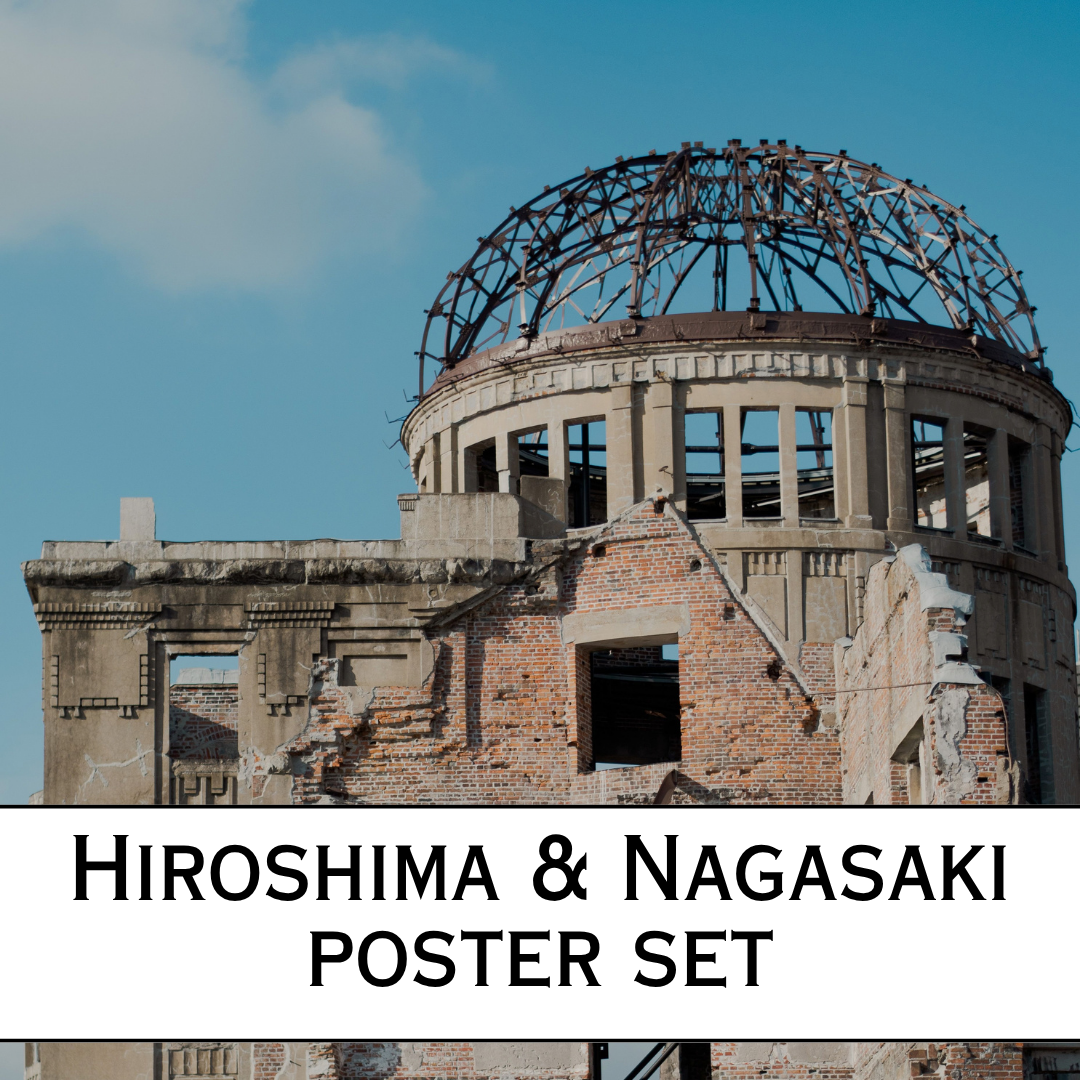
A set of 30 posters, donated by the Hiroshima Peace Memorial Museum (HPMM), are available as a learning resource to Ottawa area high schools.
The posters tell the story of Hiroshima and Nagasaki and the first use of atomic weapons on those cities in 1945. The horrific impact of nuclear weapons on the people and landscape of those cities is depicted in photographs and drawings by survivors. The text on the posters is in English, and is also available separately in French. The posters, available free of charge on loan, can be delivered to and picked up from Ottawa area schools by volunteers.
In 2025-26 the posters were used as learning resources in four different Ottawa area high schools – used by one school in two separate semesters.
Each poster is 2ft x 3ft and laminated with grommets in four corners. They are in the care of the United Nations Association in Canada-National Capital Region Branch and the community group Ban the Bomb Ottawa.
The exhibition also contains 5 additional posters, developed by Carleton University students, reflecting Canada’s connection with nuclear weapons, the current (and increasing) risk of these weapons globally and efforts by civil society and some countries toward the abolition of such weapons of mass destruction
Thanks to the tireless efforts for a nuclear weapon-free world by Ms Setsuko Thurlow, a Japanese-Canadian survivor (hibakusha) of the bombing of Hiroshima, sets of the posters were gifted by the HPMM to Ottawa and 9 other cities across Canada to mark the 80th anniversary of the bombings.
How the Posters Were Used in High Schools 2025/26
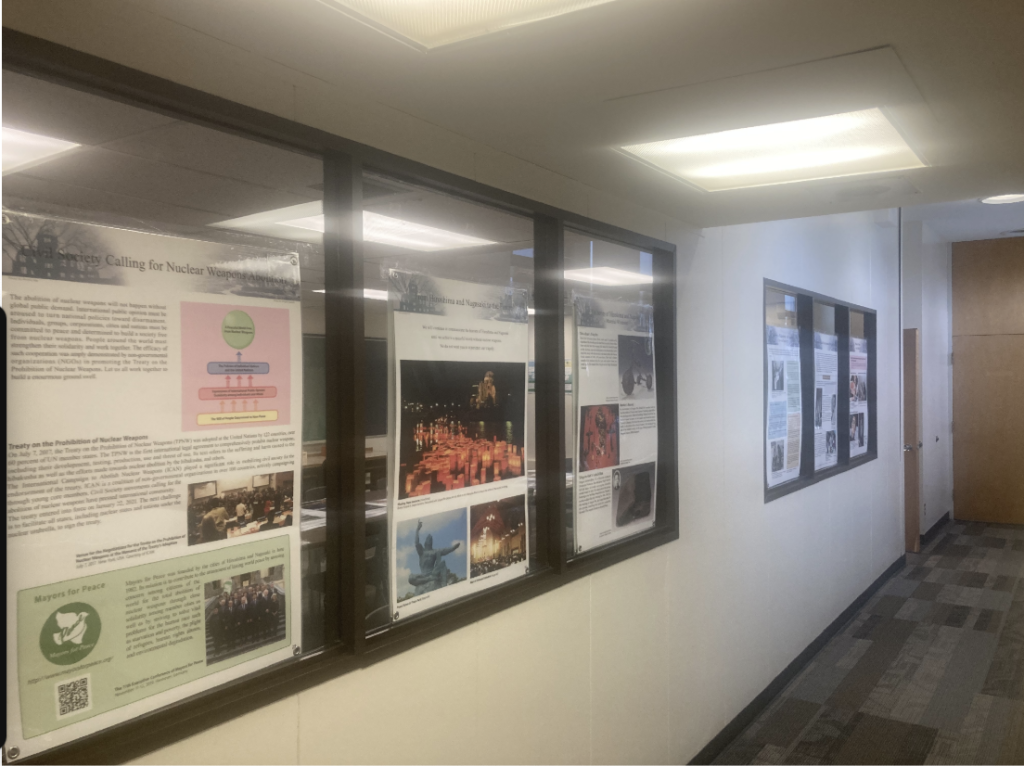
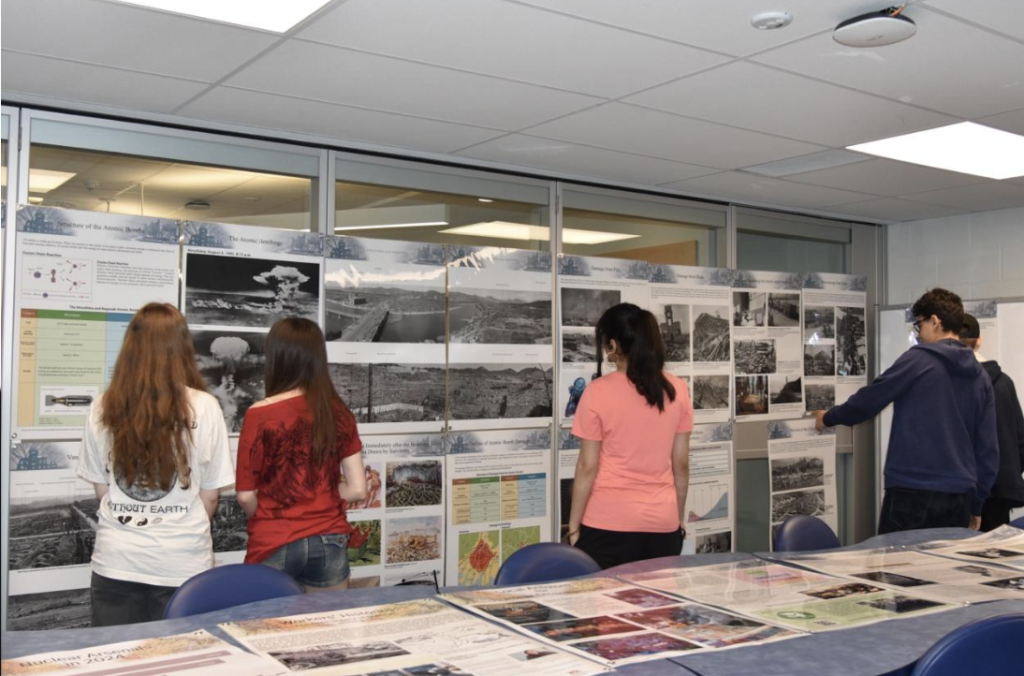
The posters were used in both English and French immersion programs and displayed in classrooms and school libraries. (see photos below)
When coupled with Supply Line Discovery Boxes from the Canadian war Museum, it made for a “wonderful learning opportunity”, said one teacher.
At one school, the posters were set up on the walls and tables of a conference room off the library. Three classes viewed the posters in addition to individual students who visited the library.
At another school where the posters were used in two separate semesters, the teacher commented
‘The posters were very engaging and sparked meaningful discussions. The students appreciated learning about what happened in Japan and why it is so important to remember these events. I used selected posters. We made Paper Cranes, and looked at the story Sadako.
She gave her students materials to journal and asked to write down their thoughts:
“It feels scary that world leaders could actually use nuclear weapons.”
“Learning about Hiroshima and Nagasaki makes me think about how important peace is today.”
In two schools selected posters were displayed in the school library. Having them available to see in the library meant the posters had a further reach than just the classroom. Teachers and librarians chose to not display the more graphic posters and explained that decision to the students.
Conclusion
The overall results of loaning the posters out to high schools were positive. All the teachers/librarians expressed gratitude for making the posters available (especially the delivery and pick-up!) and interest in having them again during the 2026/27 school year. The posters and their text sparked discussion among students who were engaged, expressing interest in having posters not screens to view.
The posters have already been booked at a local high school for a week in December 2026.
For further information about the posters, please contact Debbie Grisdale debbiegrisdale@gmail.com