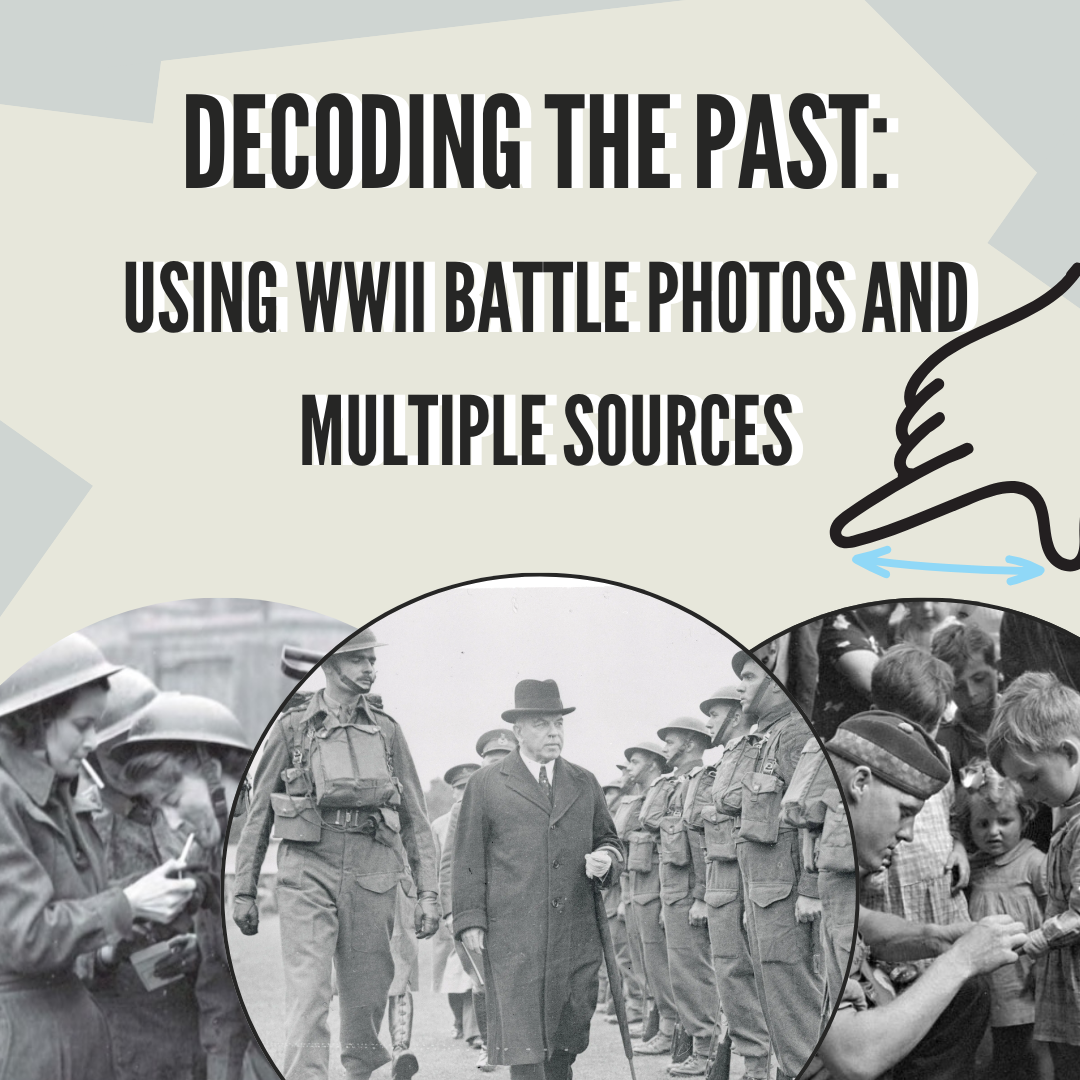
Teaching the Second World War in CHC2D requires more than delivering content—it requires helping students interpret evidence, analyze perspective, and communicate historical understanding. One powerful way to do this is by placing a historical photograph at the centre of inquiry and allowing students to access supporting information through a variety of sources.
By combining WWII battle photographs with videos, web articles, and textbook excerpts, teachers can design a lesson that reflects the principles of Universal Design for Learning (UDL) while strengthening students’ historical thinking skills.
Why Start with a Photograph?
Historical photographs are rich, complex primary sources. A single image from a WWII battle can raise lots of questions and for many learners, images provide an accessible entry point—especially when paired with choice in how students access information.
The Activity: Decoding a WWII Battle Photo Using an Overlay
Step 1: Select the Image
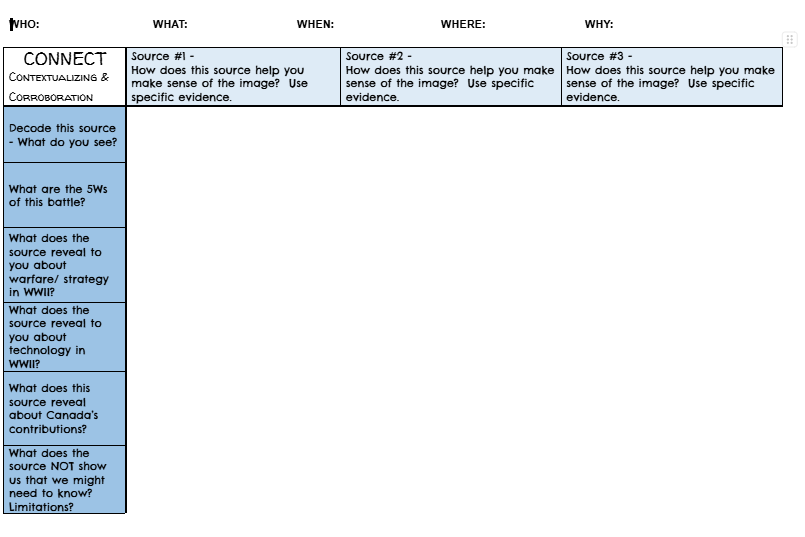
Choose a clear, compelling photograph from a WWII battle and a photo overlay to help them decode the image.
Step 2: Source Choice (UDL Representation)
Each group gets three sources and students select one source type to support their analysis:
- Video clip or documentary excerpt
- Web article or interactive resource
- Textbook passage
Step 3: Decode the Photo Using the Overlay
Students analyze the photograph by annotating directly onto chart paper or a whiteboard using the overlay to guide their analysis. Each student writes their information in a different colour marker.
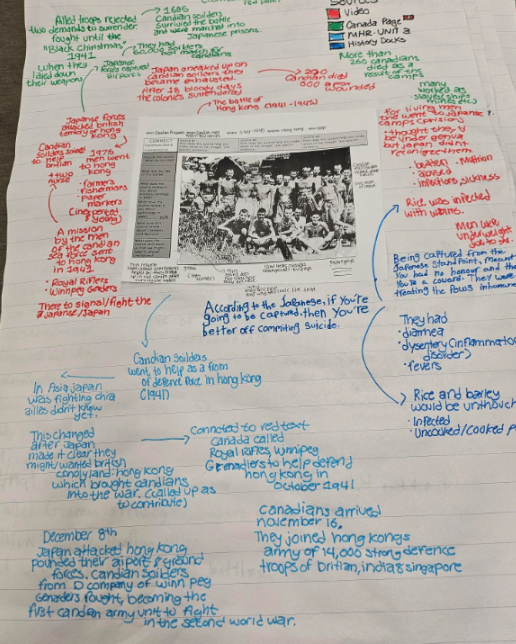
Step 4: Share
Students then individually share only the information they learned from their source—not the entire story of the photograph.
This can happen:
- As a short oral share to the class
- Through a gallery walk
- In a teacher conference
- As a recorded explanation
As each group shares, the class collectively builds a fuller understanding of the image, modelling how historians rely on multiple sources to construct meaning.